在 bitcask 论文当中,索引使用了一个哈希表来存储,这样做的好处是插入、查找、删除操作的时间复杂度都是接近于 O(1) 的,点查的速度很快。
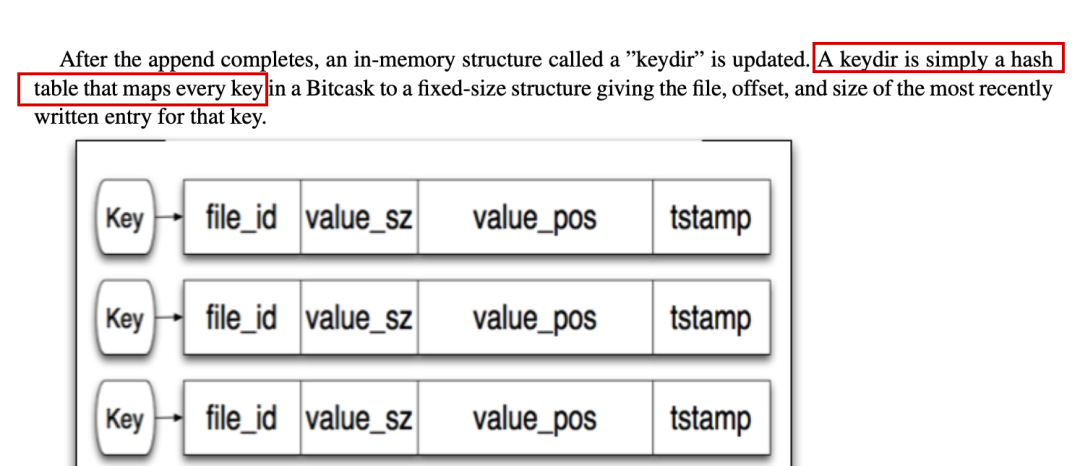
但是具体实现的时候,内存索引的选择可以是多样化的,任意能够存储 key/value 对,并且可以根据 key 取出 value 的内存数据结构都是可以的,例如 BTree、自适应基数树(ART)、红黑树、哈希表等等。所以在实现的过程当中,可以根据不同的需要去进行选择。
例如如果想要性能更好,并且对 key 顺序扫描没有要求,那么可以使用哈希表;如果想要 key 有序进行扫描,可以使用一些天然支持排序的数据结构,比如 BTree;如果想要更加的节省内存空间,那么可以使用自适应基数树。
在 rosedb 当中,最开始的 V1 版本中使用了自适应基数树(ART)作为内存索引,目前在 V2 的版本中,使用 BTree 作为内存索引。
Google 开源的 Go 语言实现的 BTree(https://github.com/google/btree)是一个使用广泛、性能优异、接口功能丰富的库,并且能够天然的支持 key 有序排列,对顺序扫描,以及范围扫描都能够很好的支持。
并且 BTree 的插入、删除、查询操作的时间复杂度接近 O(logN),速度也非常的快。
rosedb 当中的索引接口是一个 interface,这样方便在代码实现层面去接人不同的索引数据结构,索引接口的定义如下:
 1
 2
 3
 4
 5
 6
 7
 8
 9
10
11
12
13
14
15
16
17
| // Indexer is an interface for indexing key and position.
// It is used to store the key and the position of the data in the WAL.
// The index will be rebuilt when the database is opened.
// You can implement your own indexer by implementing this interface.
type Indexer interface {
// Put key and position into the index.
Put(key []byte, position *wal.ChunkPosition) *wal.ChunkPosition
// Get the position of the key in the index.
Get(key []byte) *wal.ChunkPosition
// Delete the index of the key.
Delete(key []byte) (*wal.ChunkPosition, bool)
// Size represents the number of keys in the index.
Size() int
}
|
当然除了基础的增删改查的方法之外还有一些数据遍历的方法。
开发者可以在这个基础之上去做其他的延伸,比如去实现其他的数据结构,只需要实现这个 interface 即可,其他的上下层代码都不需要进行修改。
 1
 2
 3
 4
 5
 6
 7
 8
 9
10
11
| // Change the index type as you implement.
var indexType = BTree
func NewIndexer() Indexer {
switch indexType {
case BTree:
return newBTree()
default:
panic("unexpected index type")
}
}
|
目前在 rosedb 当中只实现了 Google 的 BTree,对 btree 做了一个简单的封装,使用了 Mutex 做为读写互斥锁。
1
2
3
4
5
6
| // MemoryBTree is a memory based btree implementation of the Index interface
// It is a wrapper around the google/btree package: github.com/google/btree
type MemoryBTree struct {
tree *btree.BTree
lock *sync.RWMutex
}
|
一些简单的 Put、Get、Delete 的方法都调用了btree 的方法。
 1
 2
 3
 4
 5
 6
 7
 8
 9
10
11
12
13
14
15
16
17
18
19
20
21
22
23
24
25
26
27
28
29
30
31
| func (mt *MemoryBTree) Put(key []byte, position *wal.ChunkPosition) *wal.ChunkPosition {
mt.lock.Lock()
defer mt.lock.Unlock()
oldValue := mt.tree.ReplaceOrInsert(&item{key: key, pos: position})
if oldValue != nil {
return oldValue.(*item).pos
}
return nil
}
func (mt *MemoryBTree) Get(key []byte) *wal.ChunkPosition {
mt.lock.RLock()
defer mt.lock.RUnlock()
value := mt.tree.Get(&item{key: key})
if value != nil {
return value.(*item).pos
}
return nil
}
func (mt *MemoryBTree) Delete(key []byte) (*wal.ChunkPosition, bool) {
mt.lock.Lock()
defer mt.lock.Unlock()
value := mt.tree.Delete(&item{key: key})
if value != nil {
return value.(*item).pos, true
}
return nil, false
}
|
rosedb 的索引是可以自定义实现的,开发者如果感兴趣的话,可以去按照各自的需求进行实现,这里推荐一些开源的库,可以作为一些不错的候选,感兴趣的同学可以自己去实现。
广告区:
《从零实现 KV 存储》,使用 Rust 和 Go 两种语言实现,手把手教学,只需要基础的语法知识,即可学会一个硬核实战项目!
《从零实现 SQL 数据库》,使用 Rust 手写一个数据库系统,超级硬核,Rust 实战项目首选!
课程详情:https://roseduan.cn/course/